Demystifying Java OOP : A Begginer - Friendly Guide to Building Better Software (EAPI)
Learn the core principles of Java Object-Oriented Programming (EAPI) with real-world analogies. A comprehensive guide for beginners and interview preparation.
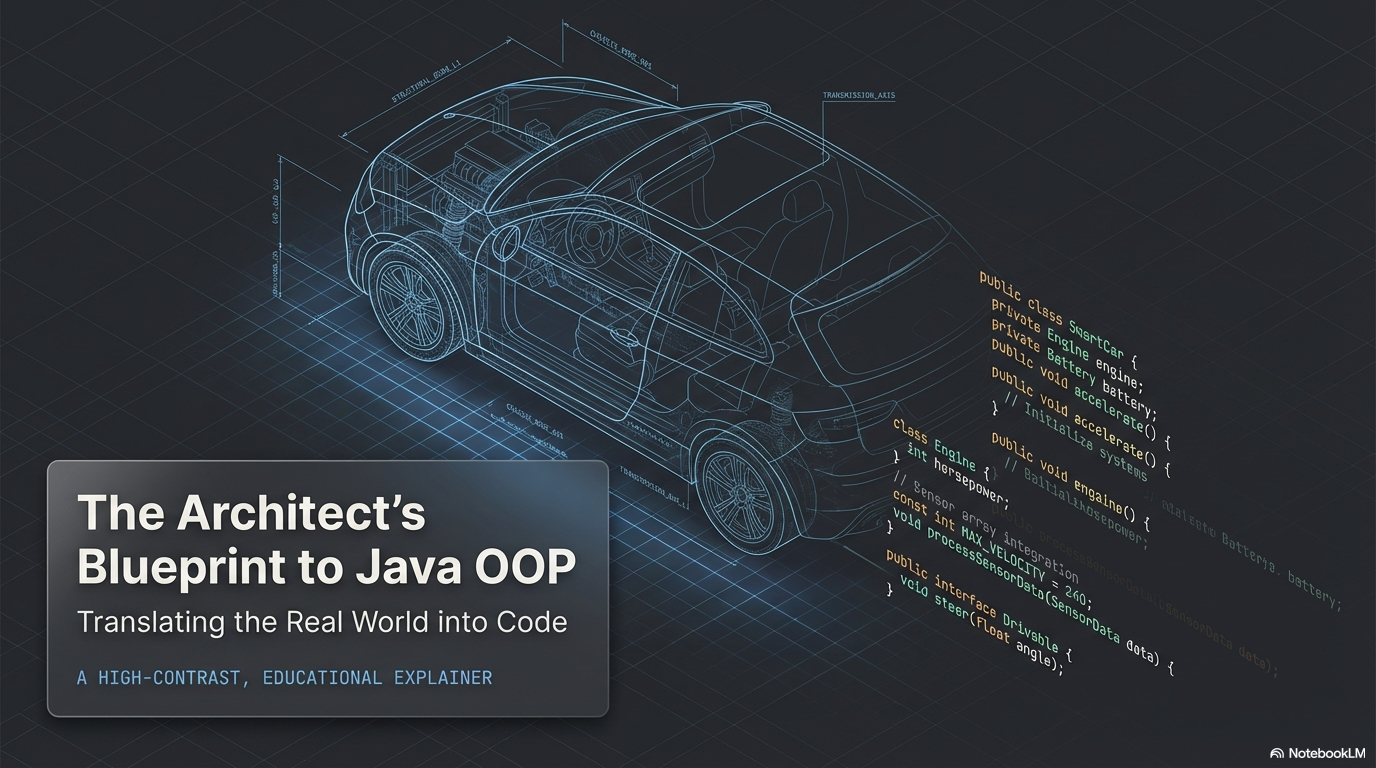
Java is one of the most popular programming languages in the world, and its power lies in a concept called Object-Oriented Programming (OOP). But what exactly is OOP? Instead of writing long lists of instructions, OOP allows us to model our code after real-world entities using Objects and Classes.
- The Blueprint and the House : Classes vs. Objects
Imagine you want to build a house. You first need a blueprint
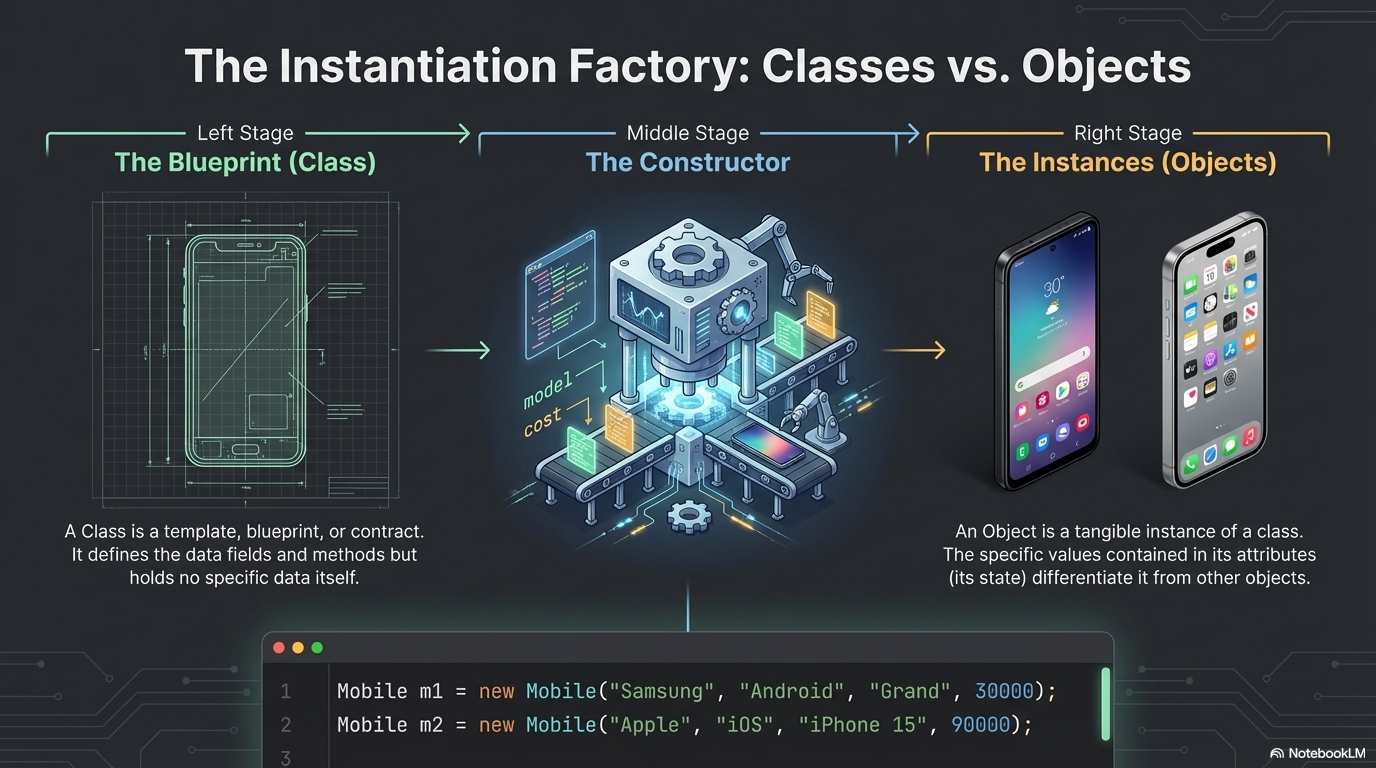
- Class : This is your blueprint. It's a template that defines what a house should have (windows, doors, rooms) and what it can do (protect from rain, provide warmth)
- Object : This is the actual house built from that blueprint. You can build many houses (Objects) from a single blueprint (Class), each with different colors or owners.
Example in Code : A Car class might define properties like brand and speed. And object myTesla would be a specific instance where brand = "Test"
- The Four Pillars of OOP
To master Java, you must understand the four core principles that make your code organized and reusable.
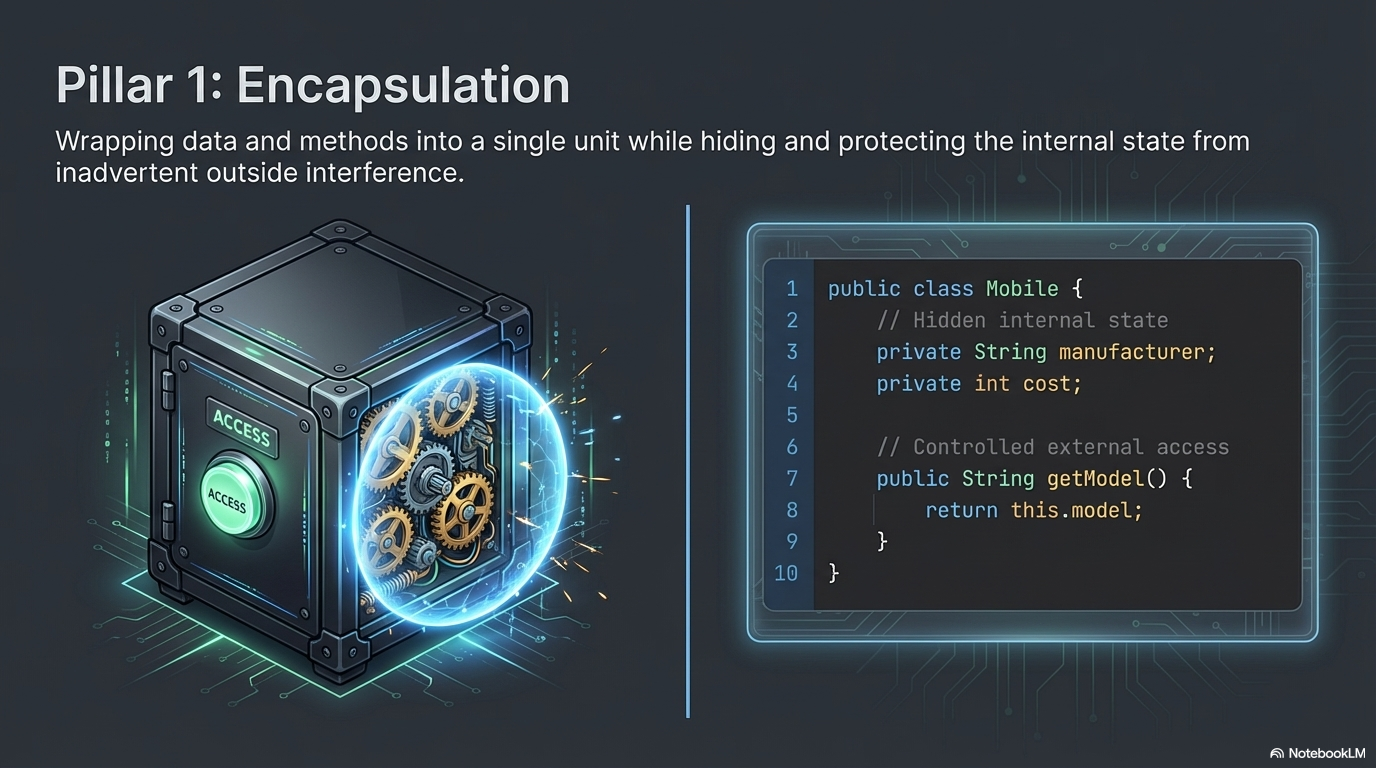
- Encapsulation (The Black Box)
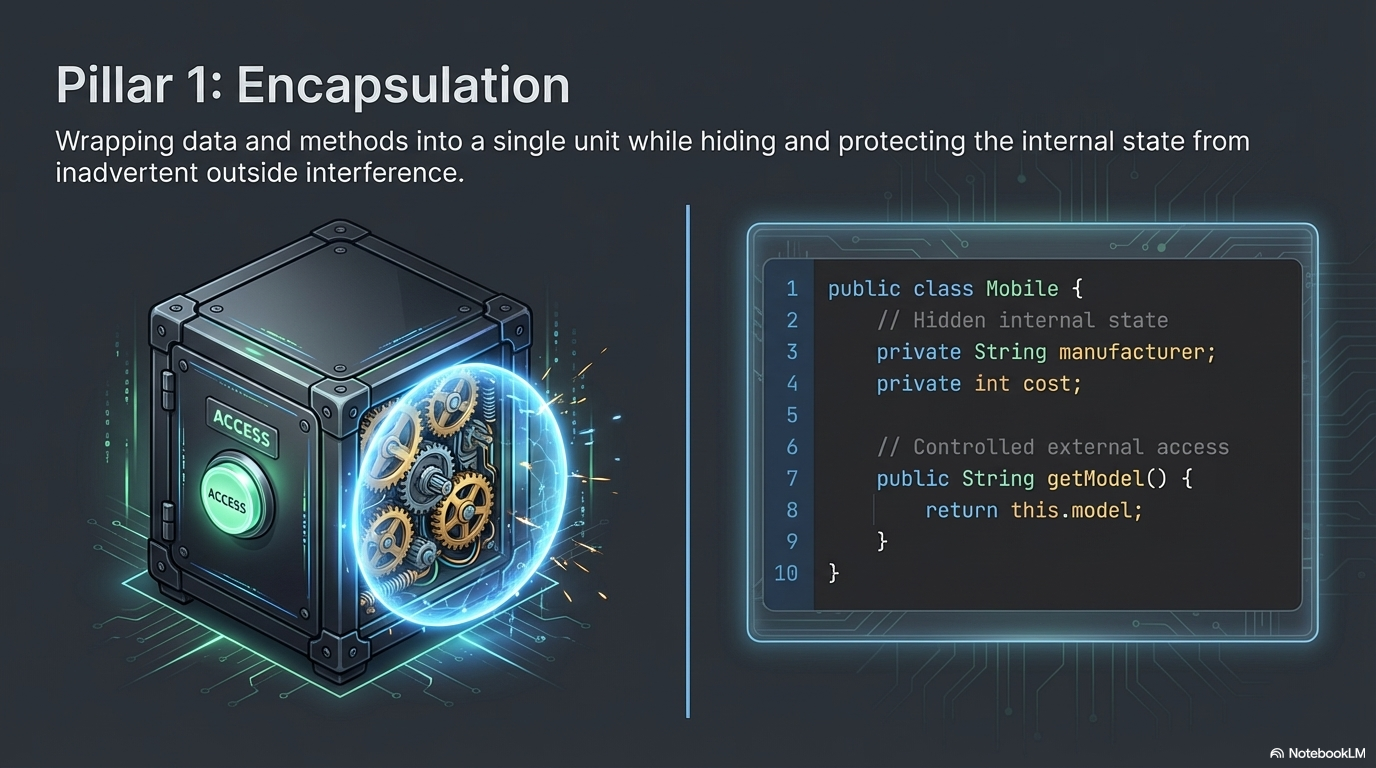
Encapsulation is about security and data hiding. It's like a "black box" where you can see what it does but not how it works inside.- How it works : Whe make variables private and provide public getter and setter methods to access them. This prevents accidental changes to the data.
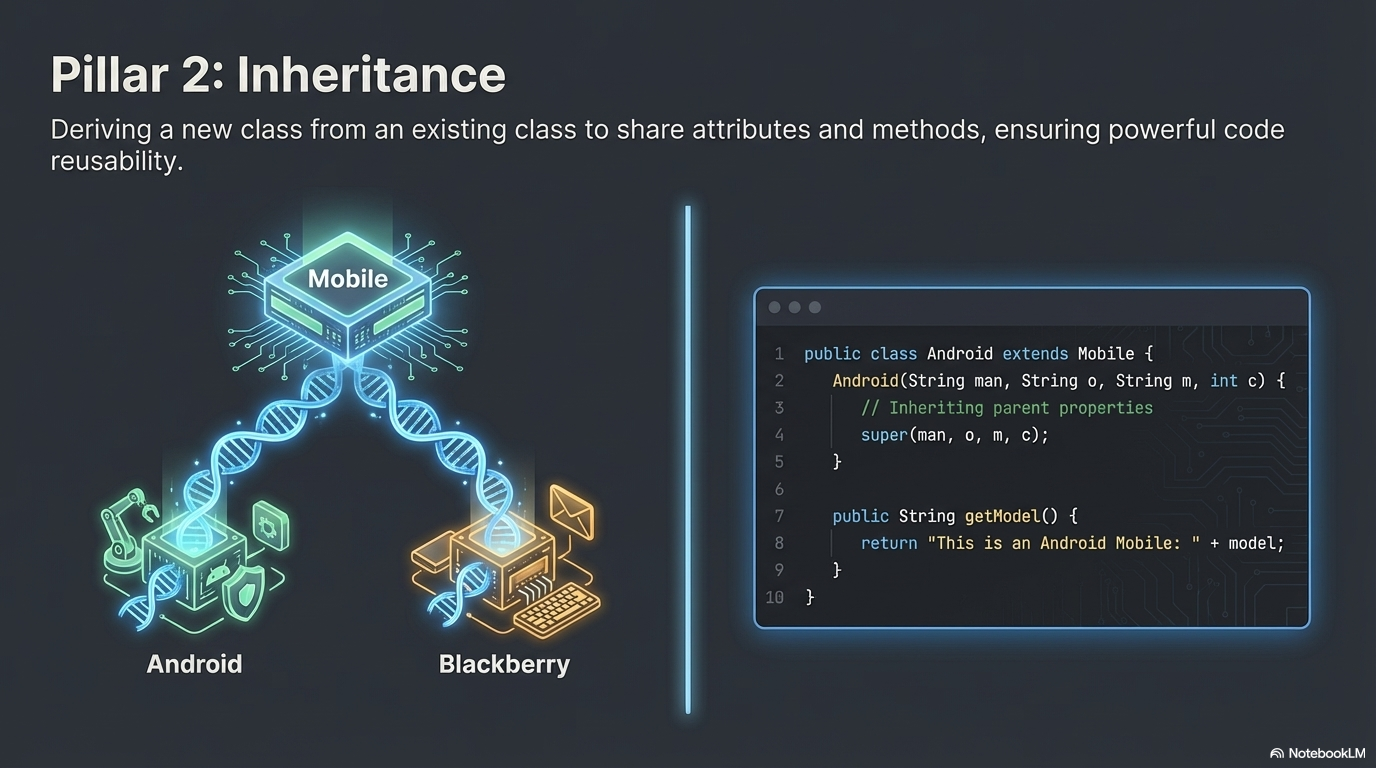
- Inheritance (The Family Tree)
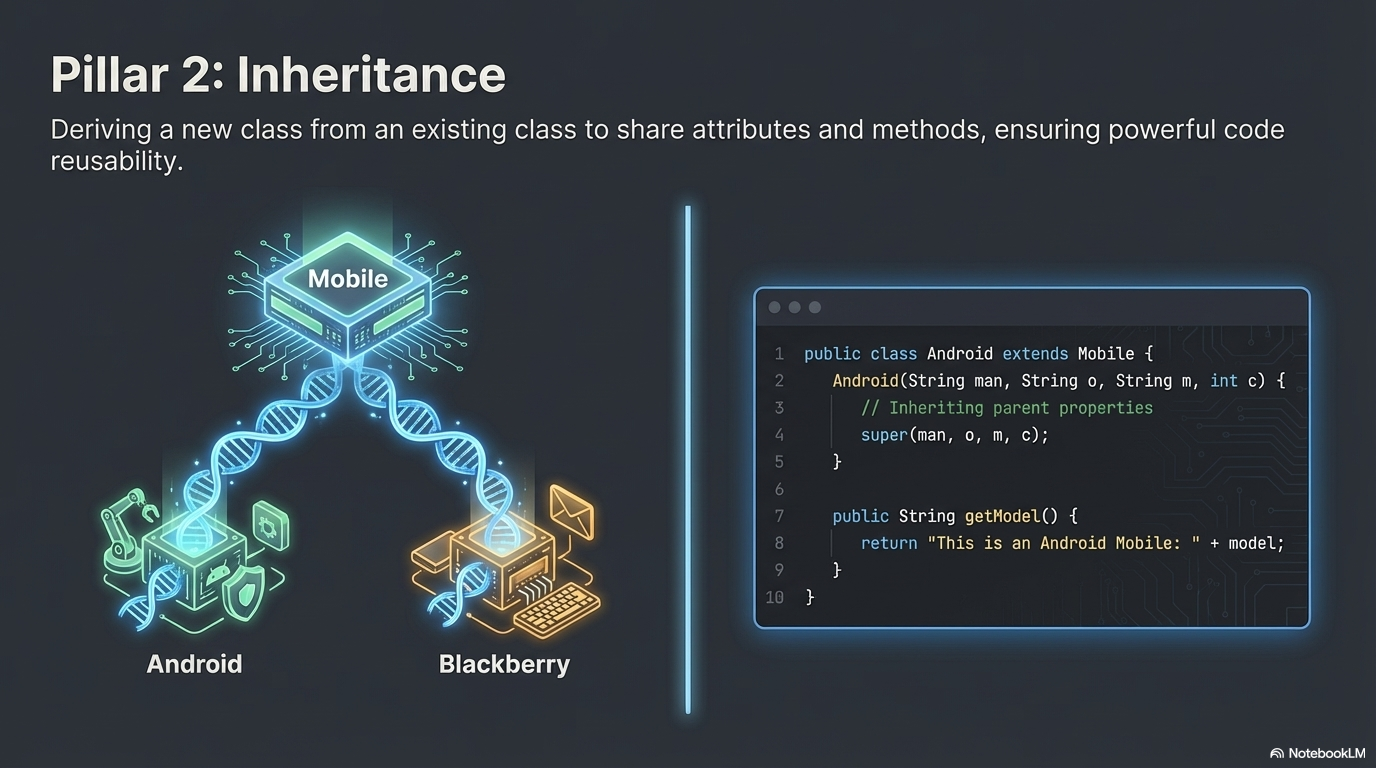
Inheritance allows one class to acquire the properties and methods of another. It promotes code reusability.- Real-world analogy : Just like you might inherit your eye color from your parents, a SmartPhone class can inherit basic features (like makeCall) from a general Phone class
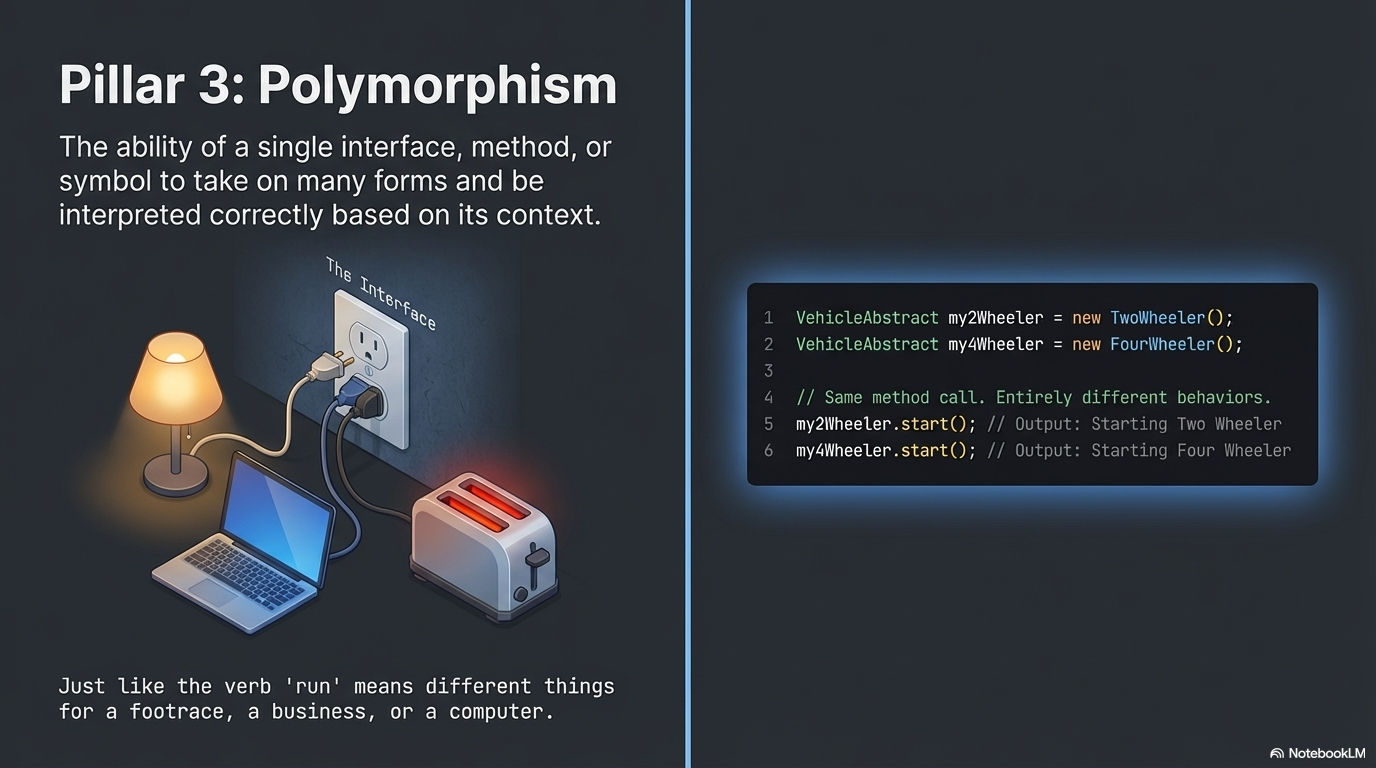
- Polymorphism (Many Forms)
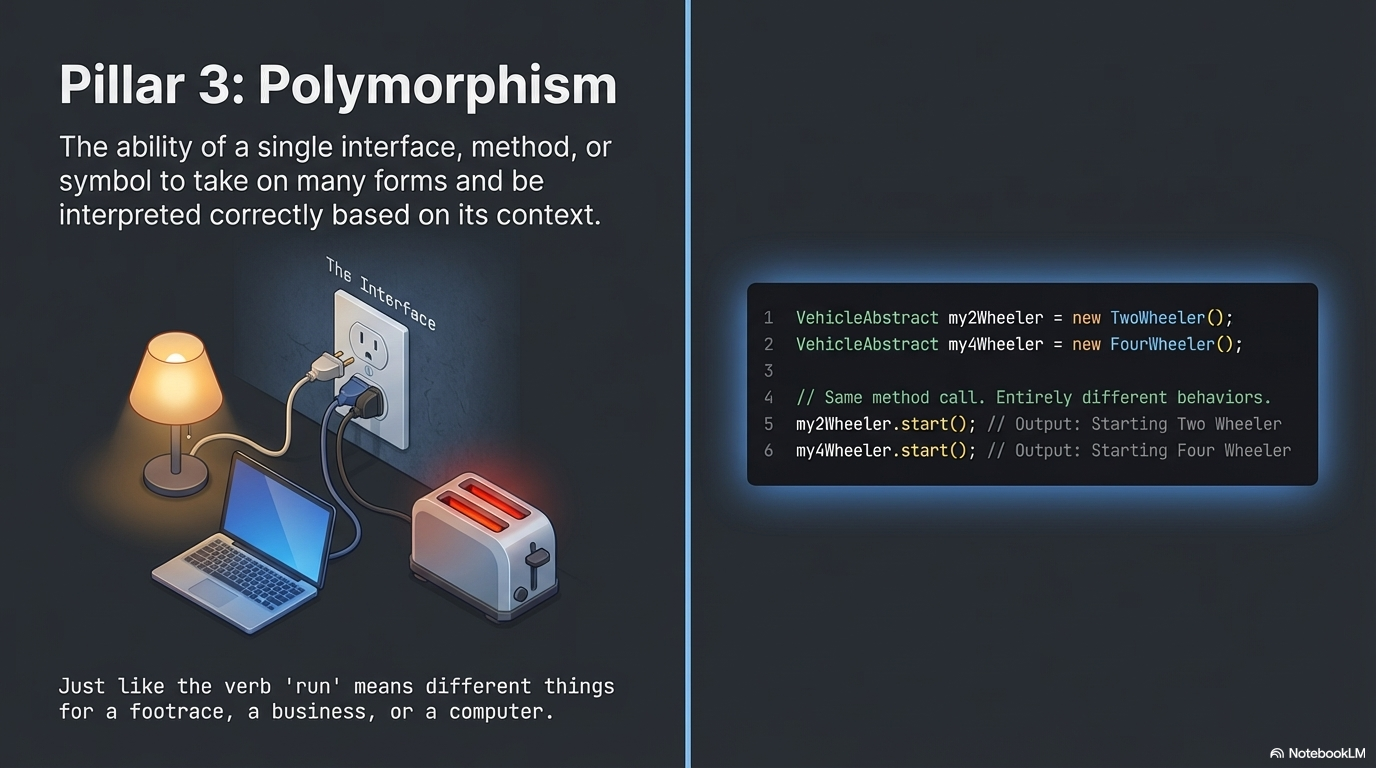
The word comes from Greek, meaning "many forms". It allows a single action to behave differently depending on the object- Method Overloading : Using the same method name with different parameters (e.g. print(init) vs print(String)
- Method Overriding : A child class giving its own specific version of a method already provided bu its parent.
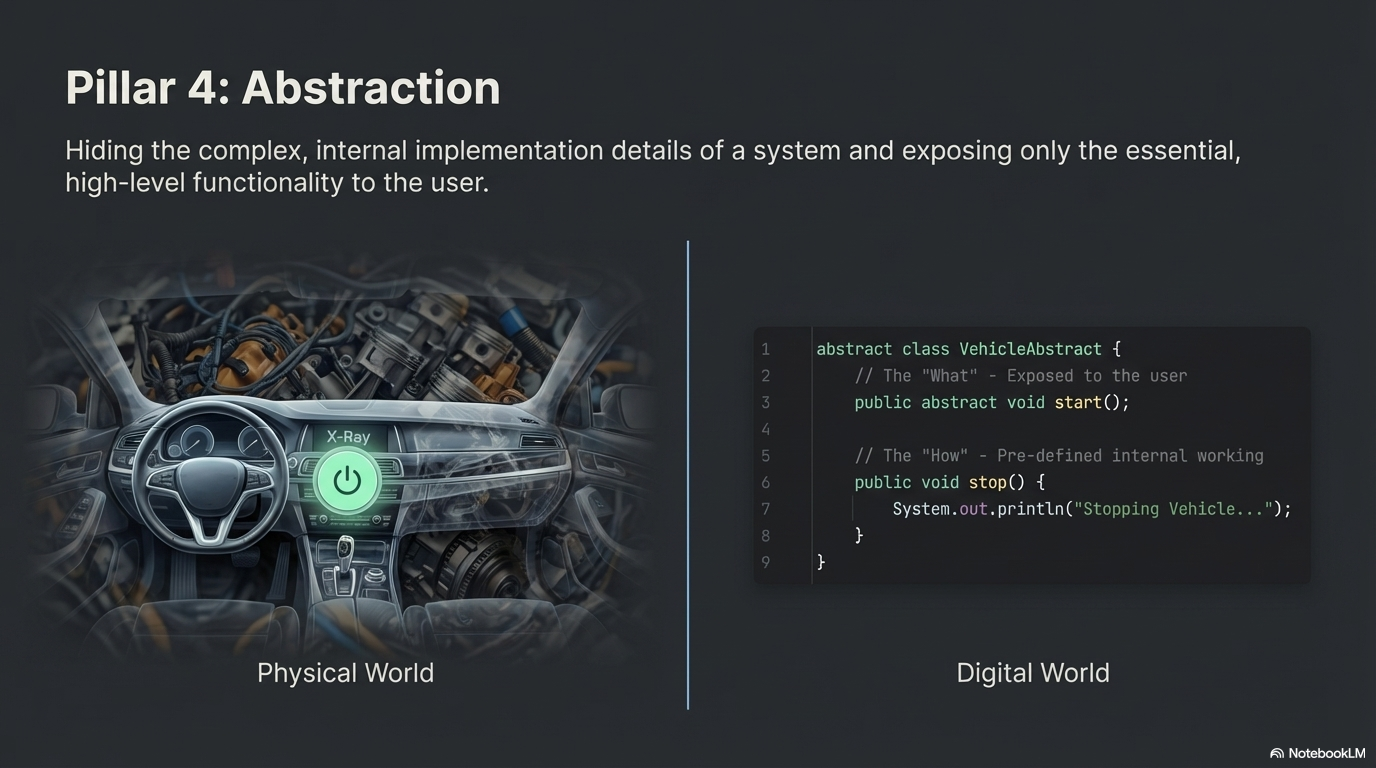
- Abstraction (Hiding Complexity)
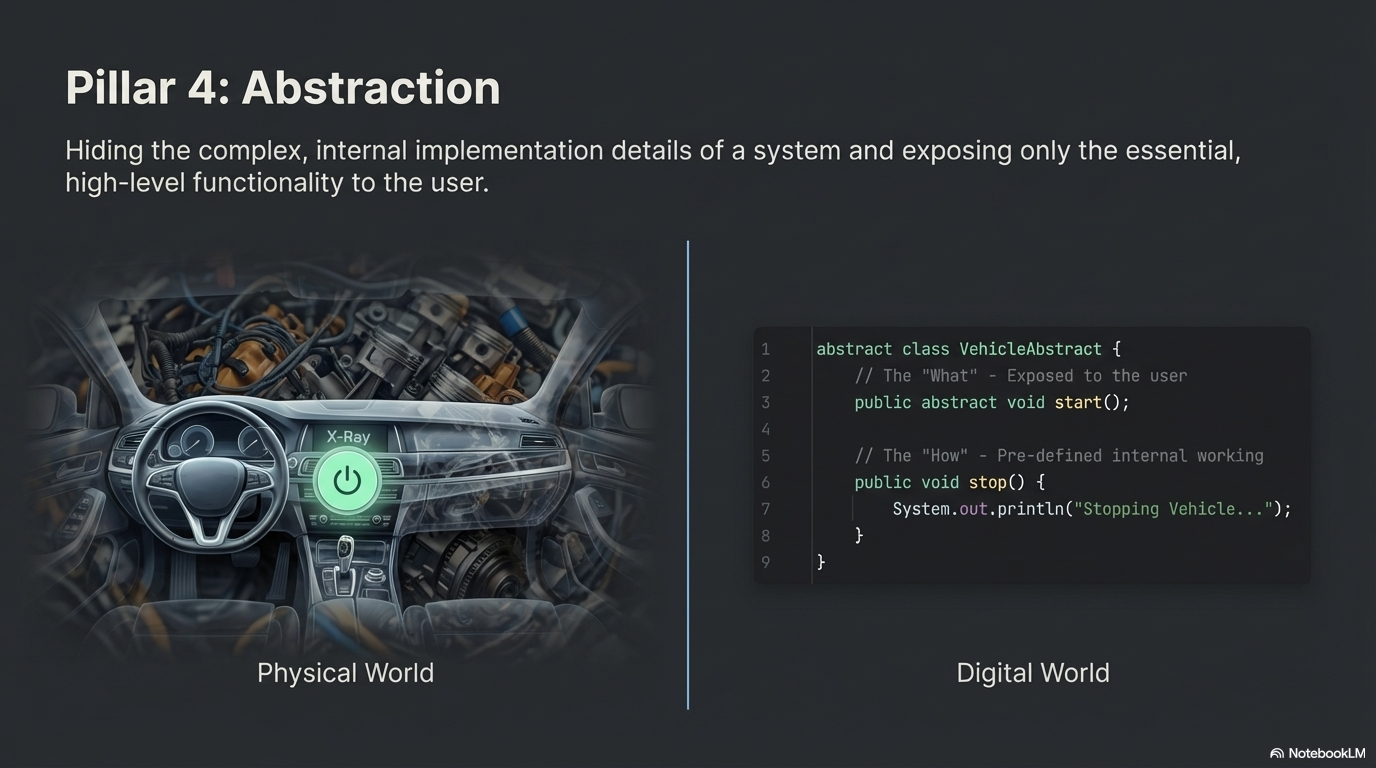
Abstraction focuses on what an object does rather than how is does it- Real word analogy : When you drive a car, you only need to steering whell and pedals. You don't need to understand the complex internal combustion engine to drive. In Java use Abstract Classes and Interfaces to achieve this.
- Why Should You Use OOP ?
- Reusability : You don't have to rewrite code from scrach
- Maintenance : It's easier to fix bugs when the code is divided into logical parts
- Security : Data hiding through encapsulatin jeeps your information safe
Conclusion
Object-Oriented Programming might seems "magical" at first, but it is simply a way to organize complex software by mimicking the real word. By mastering these concepts, you can build software that is robust, scalable, and easy to maintain
ENCAPSULATION
ABSTRACTION
POLYMORPHISM
INHERITANCE