In the rapidly evolving world of software development, quality assurance is no longer a slow, after-the-fact safety net-it is a continuous, high-velocity discipline. For nearly two decades, Selenium dominated browser automation. However, the rise of highly dynamic, asynchronous single-page applications (SPAs) exposed the limits of traditional WebDriver-based approaches.
Enter Playwright-a modern, Microsoft-backed automation framework that is rapidly becoming the preferred choice for forward-looking engineering teams. Its architectural design, developer experience, admin reliability improvements position it as the new gold standard for web automation in 2025 and beyond.
Architectural Superiority : Mobing Beyond the “Network Hop”
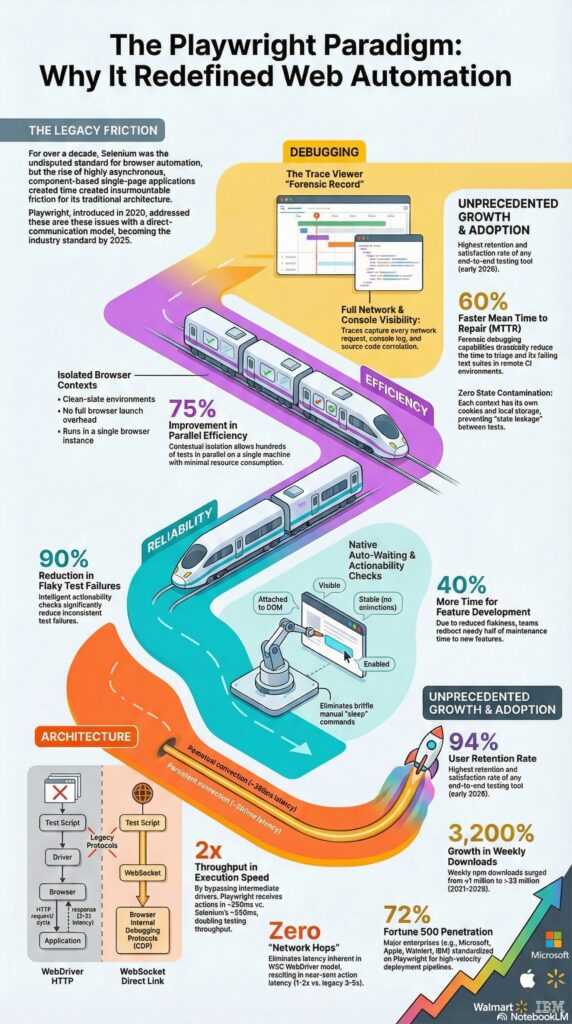
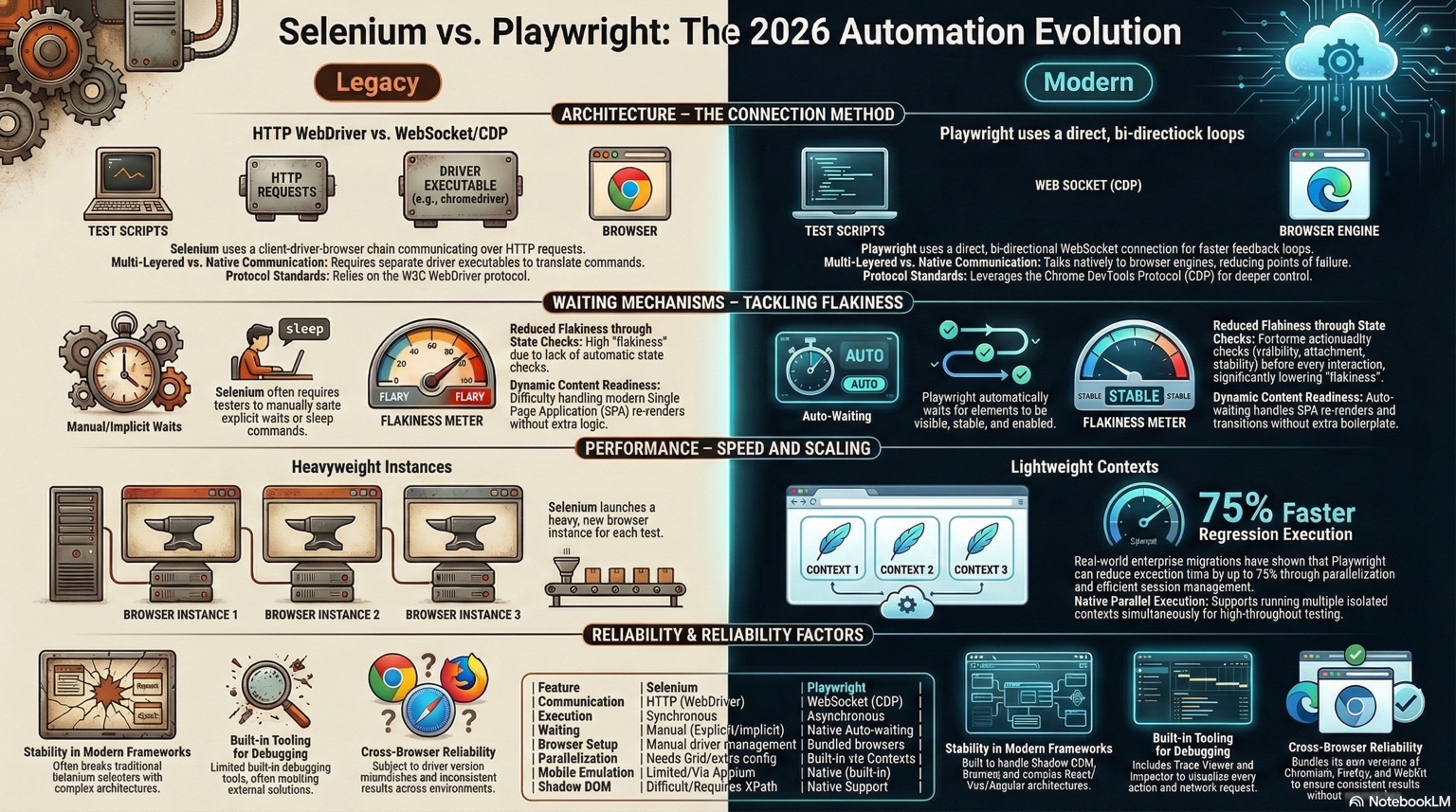
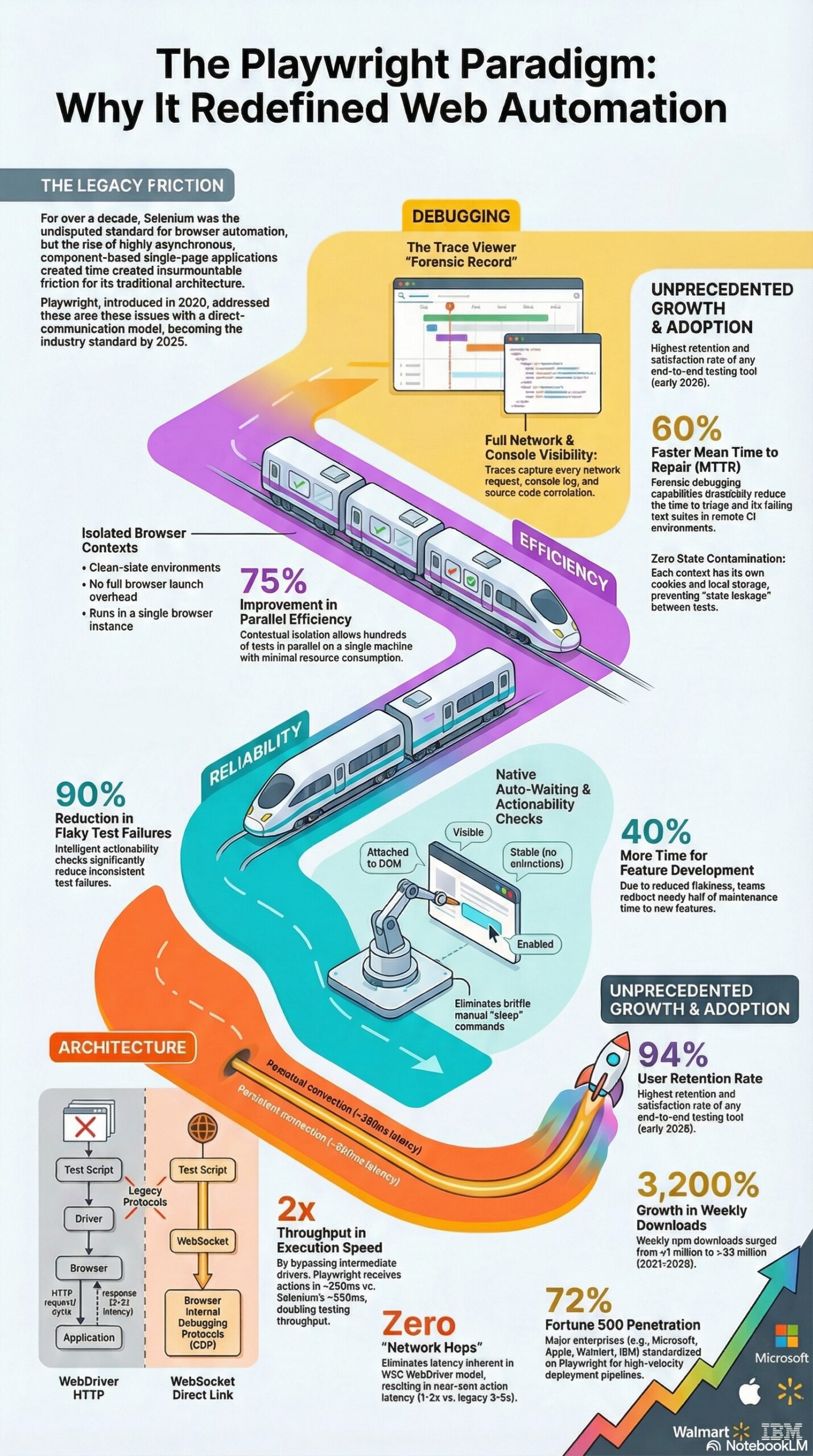
Traditional tools like Selenium rely on the W3C WebDriver protocol. In this mode, every command travels through an HTTP requests to a browser-specific driver, creating multiple layers of communication. While functional, this approach introduces latency and increases point of failure.
Playwright takes a fundamentally different path. It communicates directly with the browser through a persistent WebSocket connection using internal browser protocols such as the Chrome DevTools Protocol (CDP). By removing the intermediate driver layer, Playwright dramatically reduces command overhead and delivers near real-time execution.
The result is noticeably faster test runs and a smoother automation experience=particularly important for large CI pipelines where execution time directly impacts delivery speed.
The End of the “Flakiness” Crisis
Few problems have frustrated QA teams more than flaky tests-those unpredictable failures caused by timing issues and unstable UI states. Historically, engineers compensated with manual waits, retries, and brittle workarounds.
Playwright addresses this problem at the engine level through its actionability model. Before performing any interaction, Playwright automatically verifies that the target element is :
- Attached to the DOM
- Visible
- Stable (not animating)
- Enable
This build-in auto-waiting system eliminates the need for most explicit waits and significantly reduces intermittent failures. For many teams, this translates into dramatically lower maintenance overhead and far more trustworthy pipelines.
Infrastructure Optimization with Browser Contexts
Parallel execution has traditionally been resource-intensive. Running multiple Selenium tests often required launching multiple full browser instances, quickly consuming CPI and memory.
Playwright introduces Browser Contexts, lightweight, isolated sessions that operate within a single browser process. Think of them as incognito windows on steroids.
This model delivers several key benefits :
- Zero state leakage : Each test runs in complete isolation with its own cookies and storage
- High parallel density : Hundreds of tests can run concurrently.
- Lower resource usage : Fewer full browser launches mean more efficient CI infrastructure.
For organizations running large suites, this architectural shift can produce meaningful cost savings.
Forensic Debugging with Trace Viewer
Debugging failures in CI has long felt like investigating a crime scene with limited evidence. A single screenshot rarely tells the full story.
Playwright’s Trace Viewer changes the game by capturing a detailed, step-by-step record of the test run. Engineers can :
- Replay the test timeline
- Inspect live DOM snapshots
- Review network activity
- Examine console logs
This “time travel” capability dramatically shortens root-cause analysis and reduces the back-on-forth typically required to reproduce CI failures locally.
Cross-Browser Coverage with Native WebKit
Cross-browser testing remains essential, but Safari support has historically been painful outside macOS environments.
Playwright provides first-class support for :
- Chromium
- Firefox
- WebKit
Most importantly, Playwright runs the real WebKit engine, enabling Safari-like testing on Windows and Linux requiring macOS hardware. This ensures consistent behavior validation across major rendering engines using a single, unified API.
The 2026 Frontier : AI and Autonomous Testing
Playwright’s design also positions it well for the next wave of intelligent automation. The ecosystem is already mobing toward :
- AI-assisted self-healing, where tests adapt to selector changes
- Predictive test selection. allowing CI pipelines to run only the most relevant tests
- Smarter failure analysis, powered by richer telemetry and traces
While still evolving, these capabilities point toward a future where test suites become increasingly autonomous and self-optimizing.
Conclusion
The industry’s shift toward Playwright is not just a trend – it reflects a deeper architectural evolution in how modern web applications are tested. By combining speed, reliability, and developer ergonomics, Playwright bridges the gap between legacy automation and the demands of today’s SPA-driven (Single Page Application) ecosystems.
For organizations prioritizing fast feedback loops, stable pipelines, and efficient infrastructure, the conversation is no longer whether Playwright is viable. The real question is how quickly teams can adapt it and start realizing its benefits.
In the era of high – velocity delivery, Playwright is not just another tool – it is rapidly becoming the standard